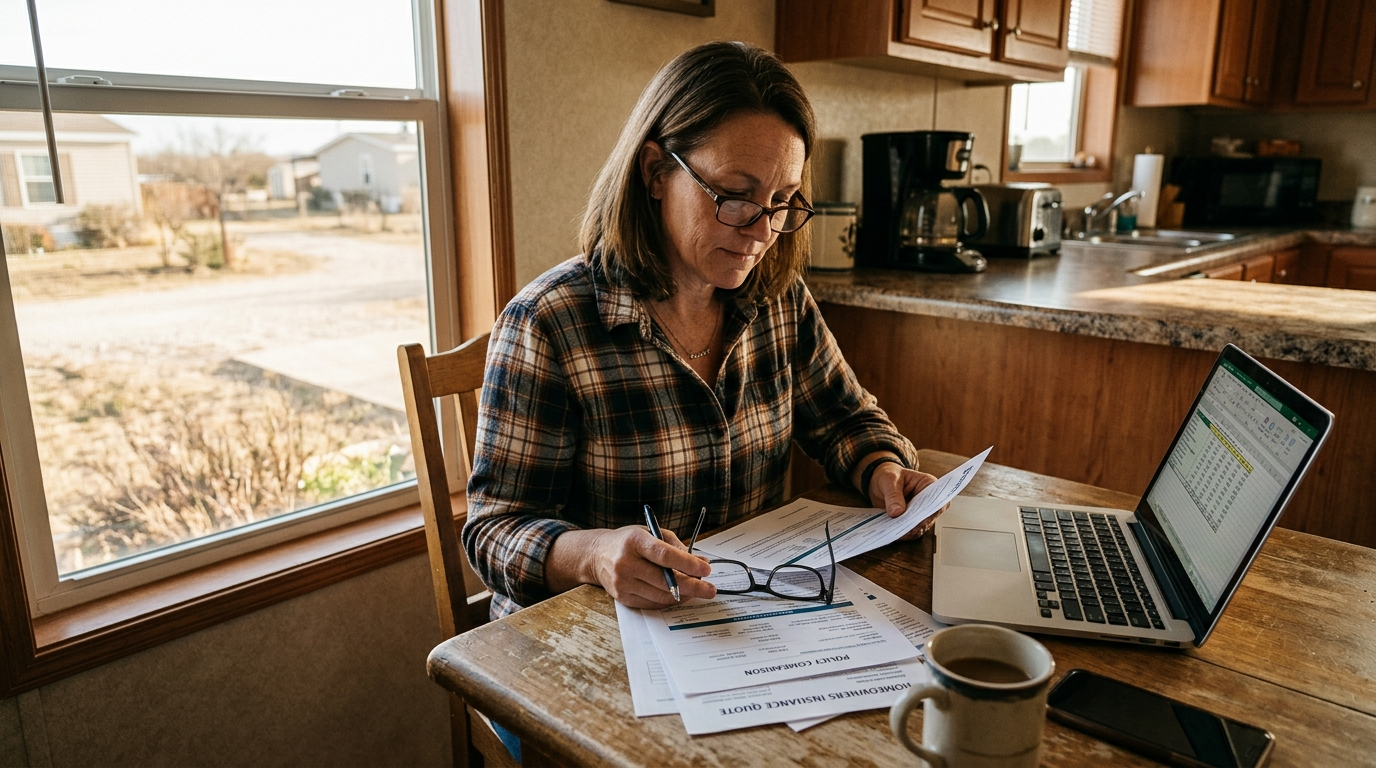
What the mobile home insurance claims process in Texas actually looks like
When a storm tears through your neighborhood or a fire damages your manufactured home, the last thing you want is to be fumbling through paperwork while your living situation is in limbo. The mobile home insurance claims process in Texas follows a specific sequence, and knowing that sequence before disaster strikes can mean the difference between a smooth payout and weeks of frustrating back-and-forth with your carrier. Texas weather is severe, and manufactured homes face real exposure from hail, high winds, flooding, and tornadoes that cut across the Gulf Coast region. This post covers each step so you know what to do and what to expect.
Step one: secure the property and document everything immediately
Before you call anyone, your first priority is safety. If the structure is unstable, do not go back inside. Once it is safe, document the damage before you move or discard anything. This step is the foundation of a strong claim, and it is where most policyholders make their first mistake by cleaning up too fast.
- Photograph every angle. Take wide shots of the exterior, close-ups of specific damage points, and interior shots of any affected rooms or belongings.
- Record a video walkthrough. A slow, narrated video is more useful than photos alone because it captures context and the relationships between damaged areas.
- Write it down. Create a written list of damaged items with estimated purchase dates and original costs where you remember them.
- Keep damaged materials. Do not throw away broken siding, roofing material, or appliances until the adjuster has seen them. Carriers can and do dispute claims when physical evidence is gone.
If your home is exposed to further damage from rain or wind coming through a breach, you are generally allowed to make temporary repairs to prevent additional loss. Keep all receipts for tarps, plywood, or emergency labor, because those costs are typically reimbursable under your policy.
Step two: review your policy before you file
Pull out your declarations page and read it before you dial the claims line. You need to know a few numbers going into the conversation with your carrier.
- Your deductible. Manufactured home policies in Texas often carry separate wind and hail deductibles expressed as a percentage of the dwelling coverage amount, sometimes 1% to 5%. On a home insured for $80,000 , a 2% wind deductible means you cover the first $1,600 out of pocket before the carrier pays anything.
- Replacement cost vs. actual cash value (ACV). This distinction matters. A replacement cost policy pays what it costs to repair or rebuild with like materials today. An ACV policy subtracts depreciation, so an older roof that costs $8,000 to replace might only net you $3,500 after depreciation is applied.
- Coverage limits for personal property. Your contents coverage has its own limit and may have sub-limits on categories like electronics, jewelry, or firearms.
- Additional living expenses (ALE). If your home is uninhabitable, ALE coverage pays for a hotel or temporary rental. Know the daily cap and the total limit so you do not spend more than the policy will reimburse.
If you are not sure what your policy says, call your agent before you call the carrier. An independent agent who represents multiple carriers can read your policy objectively and tell you where you stand, without any incentive to minimize your claim.
Step three: file the claim promptly and correctly
Texas law requires insurers to acknowledge a claim within 15 days of receiving written notice. Once you report, the clock starts on several important deadlines the carrier must meet. Do not delay filing because you think the damage might be below your deductible. You can always withdraw a claim if the estimate comes in low, but a late filing can create complications.
When you file, be ready to provide the following:
- Your policy number, listed on your declarations page and any billing statements.
- Date and cause of loss. Be specific. "Wind damage from the storm on [date]" is better than "storm damage."
- A description of the damage. General is fine at this stage. The adjuster will do the detailed inspection.
- Your contact information and preferred method of contact, so the carrier can reach you quickly.
Get the claim number in writing and note the name of every person you speak to, along with the date and time of the call. This paper trail protects you if the claim hits a snag later.
Step four: the adjuster visit and what to watch for
Under the Texas Insurance Code, the carrier must begin investigating your claim within 15 business days of receiving your written proof of loss (in most cases). An adjuster, either a company employee or an independent contractor hired by the carrier, will come out to inspect the damage.
A few things to keep in mind during this visit:
- You have the right to be present. Walk the adjuster through the damage yourself. Do not let them inspect alone and hand you a number.
- Point out everything. Adjusters work quickly. If you do not point out the soft spots in the flooring or the ceiling stain in the back bedroom, those items may not make it into the report.
- Ask for a copy of the damage estimate. You are entitled to it, and reviewing it line by line often reveals items that were missed or undervalued.
- Consider hiring a public adjuster if the damage is significant. Public adjusters work for you, not the carrier, and are licensed by the Texas Department of Insurance. They typically charge a percentage of the claim settlement, often 10% to 15%, but on a large loss they can recover enough to more than cover their fee.
Manufactured homes have construction characteristics that differ from site-built homes. HUD-code manufactured homes use different wall systems, roof trusses, and chassis components. Make sure the adjuster has experience with manufactured housing, not just traditional stick-built construction, so the estimate reflects actual repair costs for your type of home.
Step five: understand the settlement offer and your options if you disagree
Once the investigation is complete, Texas law gives the carrier 5 business days to approve or deny your claim after they have all necessary information. If approved, they must issue payment within 5 business days of that acceptance. The total window from filing to payment can be as short as a few weeks for straightforward claims, or stretch to months for complex or disputed ones.
If the settlement offer looks lower than expected, you have several options:
- Request an itemized breakdown. Ask for a line-by-line estimate so you can identify exactly where the numbers diverge from contractor quotes you have received.
- Get your own contractor estimate. A licensed contractor familiar with manufactured home repairs can give you an independent cost figure to present to the carrier.
- Invoke the appraisal clause. Most manufactured home policies include an appraisal provision. Each side hires their own appraiser, and the two appraisers agree on a neutral umpire. If two of the three agree on a number, that number is binding. This process sidesteps litigation and often resolves disputes faster than going to court.
- File a complaint with the Texas Department of Insurance. TDI investigates carrier conduct and can apply pressure when a carrier is not following the Prompt Payment of Claims Act.
- Consult an attorney. Texas has strong bad faith insurance laws. If a carrier is unreasonably delaying or denying a valid claim, an attorney who handles insurance disputes can advise you on your legal options, including potential penalties the carrier may owe beyond the claim amount itself.
Common reasons mobile home insurance claims get denied or underpaid in Texas
Understanding why claims go sideways helps you avoid the same pitfalls. These are the most frequent issues we see in the manufactured housing market:
- Pre-existing damage confusion. If your roof had prior wear and the carrier argues the current damage is not from the covered storm, document weather data (weather.gov records, local news reports) that confirms the event occurred and was significant enough to cause the damage you are reporting.
- Flood vs. wind misclassification. Standard mobile home policies do not cover flood damage. If your home sits in a low-lying area near the Houston Ship Channel or a bayou, wind-driven rain and actual flood damage can be hard to separate. A separate flood insurance policy is the only way to close that gap entirely.
- Coverage gaps on older homes. Manufactured homes built before the 1976 HUD code standards have fewer carriers willing to write policies, and those that do often impose stricter coverage conditions or ACV-only settlements on the dwelling itself.
- Neglect or lack of maintenance. Insurance covers sudden and accidental losses, not gradual deterioration. A roof that has been leaking for two years is a maintenance issue, not an insurable event. Regular upkeep protects both your home and your claim eligibility.
- Policy lapse due to missed payments. If your policy was not active on the date of loss, the claim will be denied. Set up automatic payments or calendar reminders so a missed premium never costs you your coverage when you need it most.
How JAMCO Insurance helps Texas mobile home owners through the claims process
Filing a claim is stressful enough without doing it alone. At JAMCO Insurance, we are an independent agency, which means we represent multiple carriers and work for you, not the insurance company. When you have a claim, we can help you read your policy, understand your deductible structure, and communicate with the carrier so nothing falls through the cracks. If the settlement offer does not reflect the real cost of your loss, we can help you understand your options and escalate when needed.
If you are shopping for mobile home insurance in Texas or want to compare your current coverage against what other carriers are offering, we can pull quotes from several companies and walk you through the differences in claim handling reputation, not just price. For a broader look at what to consider when evaluating carriers for your manufactured home, our guide to the best mobile home insurance companies in Texas breaks down the options in detail.
Ready to review your coverage or get a fresh quote? Reach out to the team at JAMCO Insurance online at our contact page or call us directly at (832) 777-5260 . We are here to make sure your policy actually does what you expect it to do when it matters most.
Get A Quote
At JAMCO, securing your future is easy. Ready to protect what matters? Contact us for a quick quote and personalized insurance options!
Kelly
Speak to Kelly 24/7
Microphone ready
Start your custom insurance quote
Instant answers to your insurance questions
Schedule appointments or follow-ups
Personal Insurance
From auto and homeowners to renters and umbrella policies, we help protect your family and property. Let’s find coverage that fits your life.
Commercial Insurance
We customize policies for your industry's risks, like general liability and workers' comp, ensuring you can run your business worry-free.
Contact JAMCO Insurance
Recent Posts